
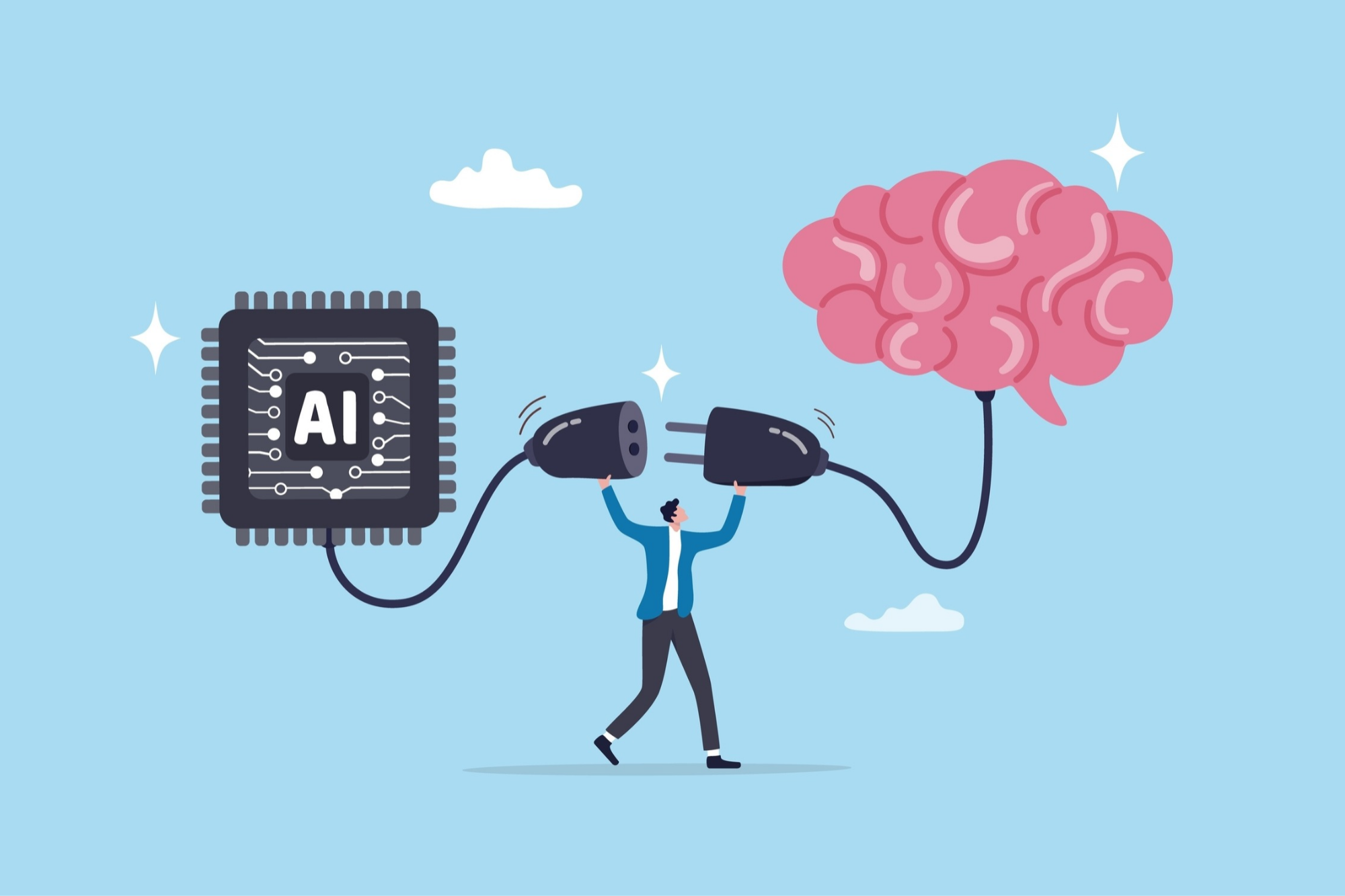
Every conversation about AI in CRE eventually drifts toward one of two fantasies:
- Fantasy 1: “We do not need this. Good people and Excel are enough.”
- Fantasy 2: “Soon the model will underwrite everything, and we will just approve.”
Neither survives contact with real deals.
If you care about putting real capital at risk in messy, path‑dependent assets, there is only one model that holds up:
Humans + AI, with very clear lines about who does what.
Anything else is either nostalgia or wishful thinking.
Why “Humans Only” Is Quietly Failing
The humans‑only model is what most firms still run, even if they do not say it out loud.
You know the signs:
- Analysts drowning in OMs, rent rolls, and T‑12s
- IC decks rebuilt from scratch for every deal
- Partners relying on memory and gut feel for “what worked last time”
- Key knowledge living in one or two people’s heads
This used to be survivable when:
- Deal flow was slower
- Data was thinner
- Clients and LPs had lower expectations for speed and transparency
Today, humans‑only means:
- You cannot see enough deals.
Pipeline capacity caps out quickly. You pass on things you never really evaluated. - Your history is underused.
Years of underwriting, memos, and outcomes sit in shared drives instead of training the next decision. - Your best people do the worst work.
High‑value thinkers spend hours cleaning data and reformatting the same analysis, instead of challenging assumptions.
The risk is not just opportunity cost. It is that you are running nine‑figure decisions on:
- Partial information
- Uneven memory
- Inconsistent process
while your competitors start to industrialize how they see and learn from deals.
Why “AI Only” Will Never Work In CRE
On the other extreme is the AI‑only pitch.
You hear versions of:
- “We can underwrite automatically.”
- “We will tell you what to buy and when.”
That sounds efficient until you remember what CRE actually looks like:
- Incomplete and noisy data
- Idiosyncratic leases and local politics
- Tenants that matter more than the shell around them
- Capital stacks that reflect relationships as much as math
AI is very good at:
- Reading fast
- Comparing patterns
- Scoring risk based on past data
AI is very bad at:
- Understanding how a specific tenant fits a long‑term strategy
- Pricing reputational risk or political risk that is not in the spreadsheet
- Taking legal or fiduciary responsibility when a call goes wrong
You can let AI propose.
You cannot let AI own.
In CRE, an AI‑only model is not just risky. It is structurally impossible to defend to IC, LPs, lenders, or regulators.
What Humans + AI Actually Looks Like In A Deal
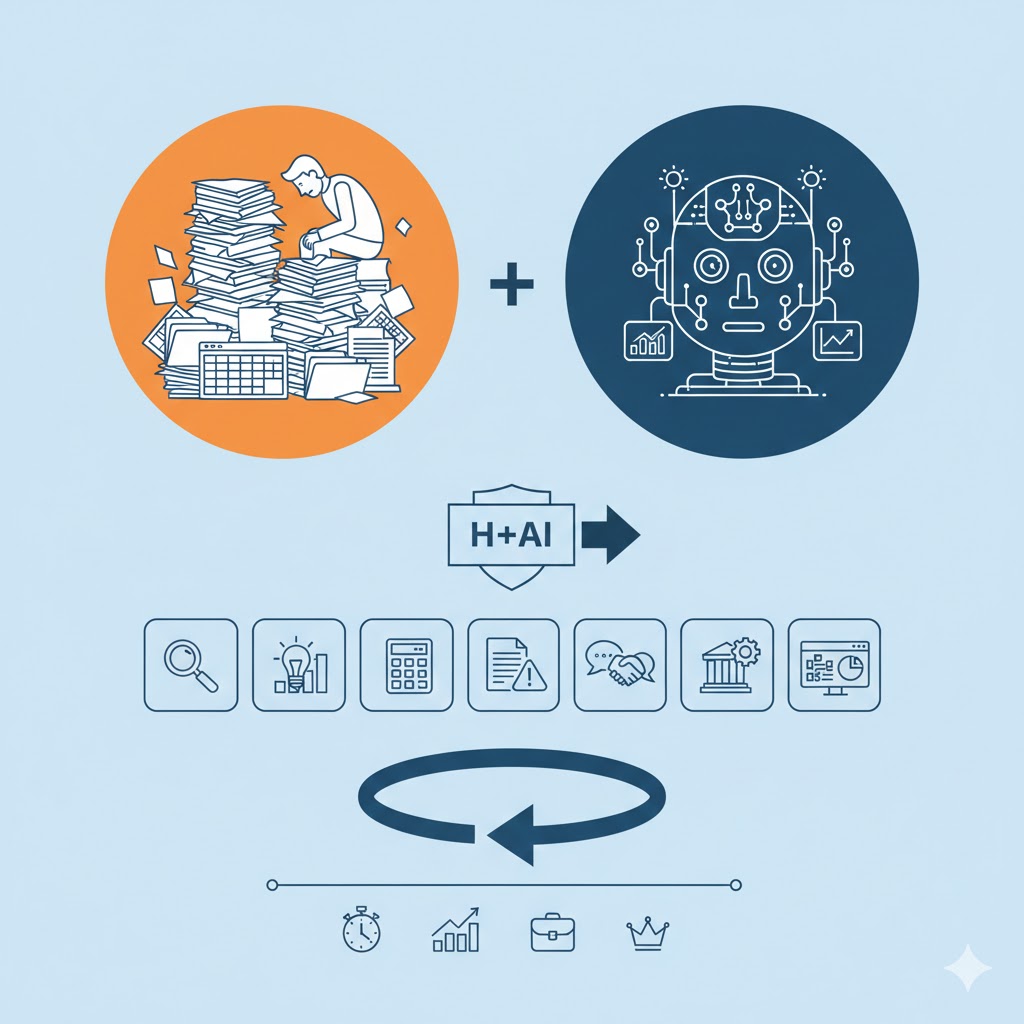
So what does a real Humans + AI model look like in practice?
Think of it as a division of labor across the deal lifecycle.
1. Sourcing and triage
AI:
- Ingests every OM, rent roll, and flyer
- Extracts basic metrics and compares them to your box
- Flags deals that resemble past winners or known losers
Humans:
- Define the investment box
- Decide which “off‑box but interesting” deals deserve a live look
- Refine sourcing criteria based on what is actually converting
Outcome: You see more relevant deals without flooding the team with noise.
2. Underwriting
AI:
- Builds first‑pass models from raw documents
- Surfaces comps and benchmarks you already have
- Highlights where current assumptions sit relative to your own history
Humans:
- Set the real objective for this deal (what “win” means here)
- Decide which comps and assumptions are credible
- Own the base, downside, and upside cases
Outcome: You spend less time typing numbers and more time arguing about the 2–3 inputs that actually move the equity.
3. Due diligence
AI:
- Reads leases, title, SNDA, environmental, engineering, and zoning reports
- Extracts key clauses and conflicts
- Compares docs against your standard positions and past problem areas
Humans:
- Name the single assumption that kills the deal if it is wrong
- Demand hard evidence for that assumption
- Decide whether the risk is adequately priced or not
Outcome: You cover more ground in the same DD window and focus human attention on the real point of failure.
4. Investment committee
AI:
- Summarizes the file into clean, comparable IC views
- Shows how this deal lines up with past wins, misses, and disasters
- Quantifies how aggressive or conservative current assumptions are
Humans:
- Debate the thesis
- Weigh strategic fit, concentration, partner quality, and context
- Vote, document the rationale, and own the outcome
Outcome: IC spends less time asking for basic facts and more time deciding whether this belongs in the portfolio.
5. Negotiation
AI:
- Tracks how terms and language evolve across drafts
- Compares positions to prior deals with the same counterparty or counsel
- Designs concession packages that protect your true walkaway
Humans:
- Set non‑negotiables
- Choose which trade‑offs to offer and when
- Decide when the pattern of behavior says “this is not our deal”
Outcome: You negotiate against the other side’s AI with your own, while humans still decide where to land or when to walk.
6. Asset management
AI:
- Monitors operating performance, leasing, and market signals
- Flags assets drifting off plan or matching past trouble patterns
- Suggests playbooks based on similar properties in your history
Humans:
- Decide when to intervene and how hard
- Choose between capital calls, refinances, sales, or heavier lifts
- Communicate with investors and lenders
Outcome: You catch problems earlier and base interventions on more than whoever shouted the loudest in the monthly meeting.
Why This Hybrid Is The Only Defensible Story
If you manage capital for anyone other than yourself, you get two recurring questions:
- “What is your process?”
- “How do you learn from mistakes?”
A Humans + AI model gives you a clean answer.
You can say:
- “Here is what our people decide and sign.”
- “Here is how AI supports them with data and patterns.”
- “Here is the evidence trail from inputs to decision to outcome.”
Versus:
- Humans‑only: “We rely on experience and a strong team.”
- AI‑only: “The model liked it.”
One sounds dated.
The other is not acceptable when things go wrong.
Humans + AI, with clear roles and an audit trail, is the only model that:
- Scales your best thinking
- Uses your history as an asset, not a graveyard
- Survives a tough conversation with an LP or credit committee after a bad outcome
You are not trying to prove that AI can replace people. You are trying to prove that your people, amplified by AI, make cleaner, faster, and more defensible decisions than either one could alone.
In CRE, that is the only model that actually works.
If you are running deals in CRE and want to build a real Humans + AI playbook instead of waiting on a perfect “AI strategy,” start now and join the CRE Agents waitlist: https://creagents.com