

You recorded the video. You sat in front of a camera, walked through the deal, explained the model, shared the insight. That part is done.
What doesn’t happen — at least not consistently — is turning that video into a written article that gets found on Google, lives on your website, and keeps working for you long after the video is uploaded. Not because the content isn’t there. Because writing takes time most CRE professionals don’t have.
That’s exactly what this task is built to fix.
What This Task Does
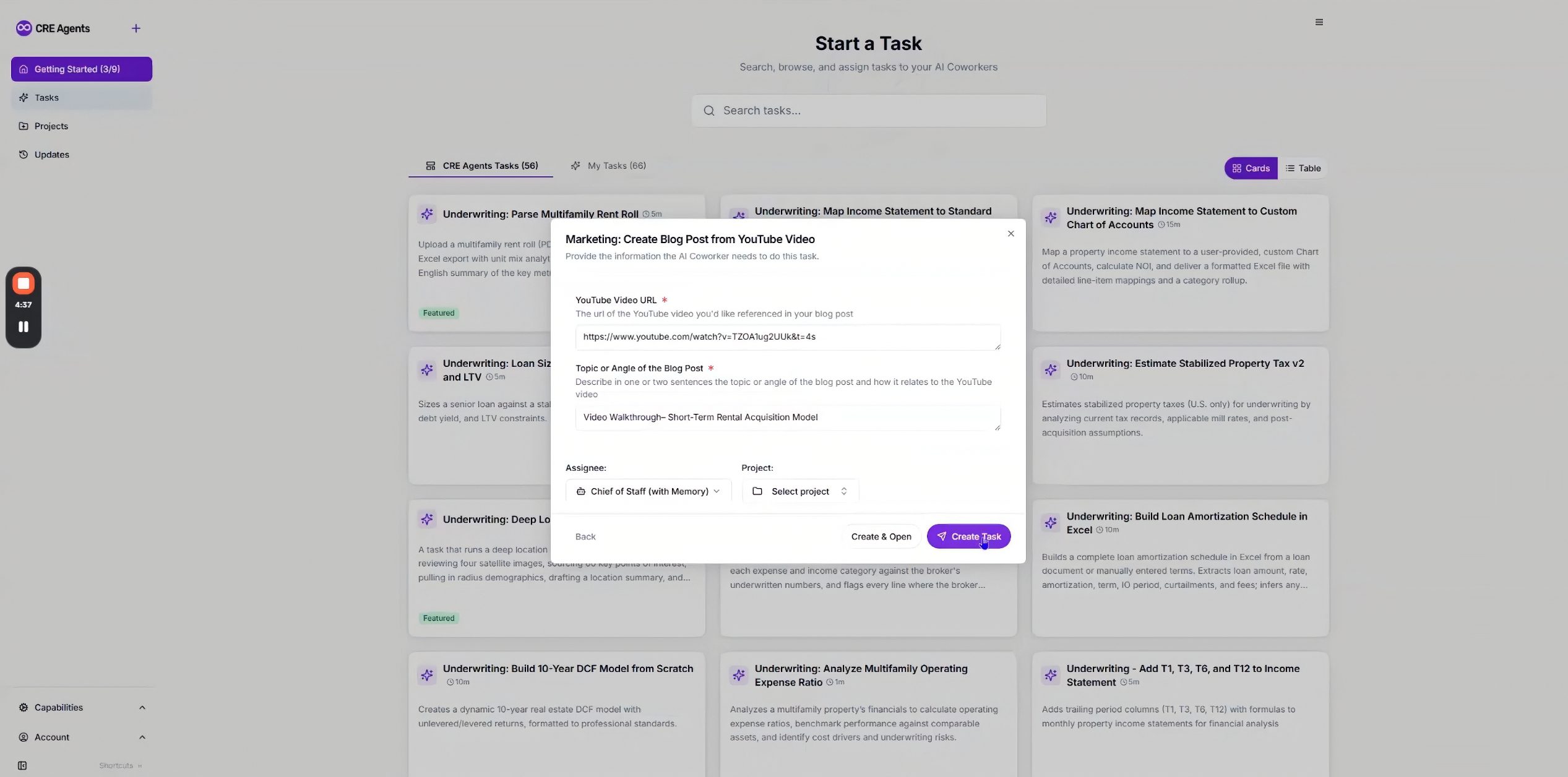
Give the AI coworker two things: a YouTube video URL and a short description of the topic or angle you want the post to cover. That’s it.
From there, the Chief of Staff AI coworker pulls the video transcript, extracts the key ideas, and generates a complete, SEO-structured blog post — with a title, organized sections, logical flow, and a clear conclusion. The output lands directly inside your CRE Agents workspace, ready to review, copy, and publish.
The whole process takes roughly five minutes of your time. The AI does the rest.
Who This Task Is For
If you’re posting YouTube content about commercial real estate — market updates, deal walkthroughs, model explainers, underwriting tutorials, firm introductions — and you’re not converting those videos into written content, you’re leaving reach on the table.
This task is built for:
- CRE Brokers and Advisors who record market commentary or property tours and want to extend their content’s life beyond YouTube
- CRE Educators and Firms running A.CRE-style tutorial libraries who want companion blog posts for every video they publish
- Asset Managers and Operators who do quarterly or monthly video updates for investors and want a written version for their website or email
- Marketing Teams supporting CRE firms who need to produce more written content without more writing hours
In short: if you already have the video, this task gives you the article.
Why It Matters
Video content doesn’t rank in search the way written content does. A 20-minute walkthrough of a financial model is valuable — but it won’t surface when someone types “how to underwrite a short-term rental acquisition” into Google. A well-structured blog post will.
Most CRE professionals know this. The gap isn’t awareness. It’s bandwidth.
Writing a 700-word post from a 20-minute video takes real time: re-watching, outlining, drafting, editing. Most of that work gets skipped. The video goes up, the article never gets written, and the content compounds nothing.
This task closes that gap. You publish the video. You run the task. You get the article. The content does more work without you doing more work.
That’s the multiplier.
What the Output Looks Like
The blog post generated by this task includes:
- An SEO-optimized title based on the topic you provide
- An introductory paragraph that hooks the reader and sets up the subject
- Organized sections with clear headers drawn from the video’s content
- Numbered steps or frameworks where the video uses them
- A closing section that lands the key takeaway
The output is not a transcript cleanup. It’s a structured article — the kind you’d expect from a professional writer who watched the video and knew what to do with it.
CRE Agents is a platform built for commercial real estate professionals who want to move faster without cutting corners. Task #1 is just the beginning.
Frequently Asked Questions About Converting CRE Video Content Into Blog Posts With AI
Always review before publishing. The output is a strong first draft with structure, flow, and SEO formatting already handled, but you should add your own voice, correct any nuance the AI missed, and make sure the post reflects your actual point of view on the topic. Most users spend 10 to 15 minutes editing versus the hour or more it would take to write from scratch. The goal is to eliminate the blank page problem, not to remove your judgment from the final product.
Google has stated it rewards helpful content regardless of how it was produced. The key is that the post needs to be genuinely useful and well-structured, not a raw transcript dump. This task produces a reorganized, original article, not a cleaned-up transcript, which is an important distinction. Adding your own edits, examples, or commentary before publishing strengthens the post further. The bigger SEO risk is not publishing a written version at all, because video content on its own does not rank for the search queries your audience is typing.
Yes, and that is one of the highest-value uses of this task. Most CRE professionals have months or years of video content sitting on YouTube generating views but no search traffic. You can work through your backlog by running one or two videos per day through the task and publishing the edited posts on a consistent schedule. A firm with 50 existing videos could build out a substantial blog library in a matter of weeks, which creates compounding SEO value that a single video upload never will.