
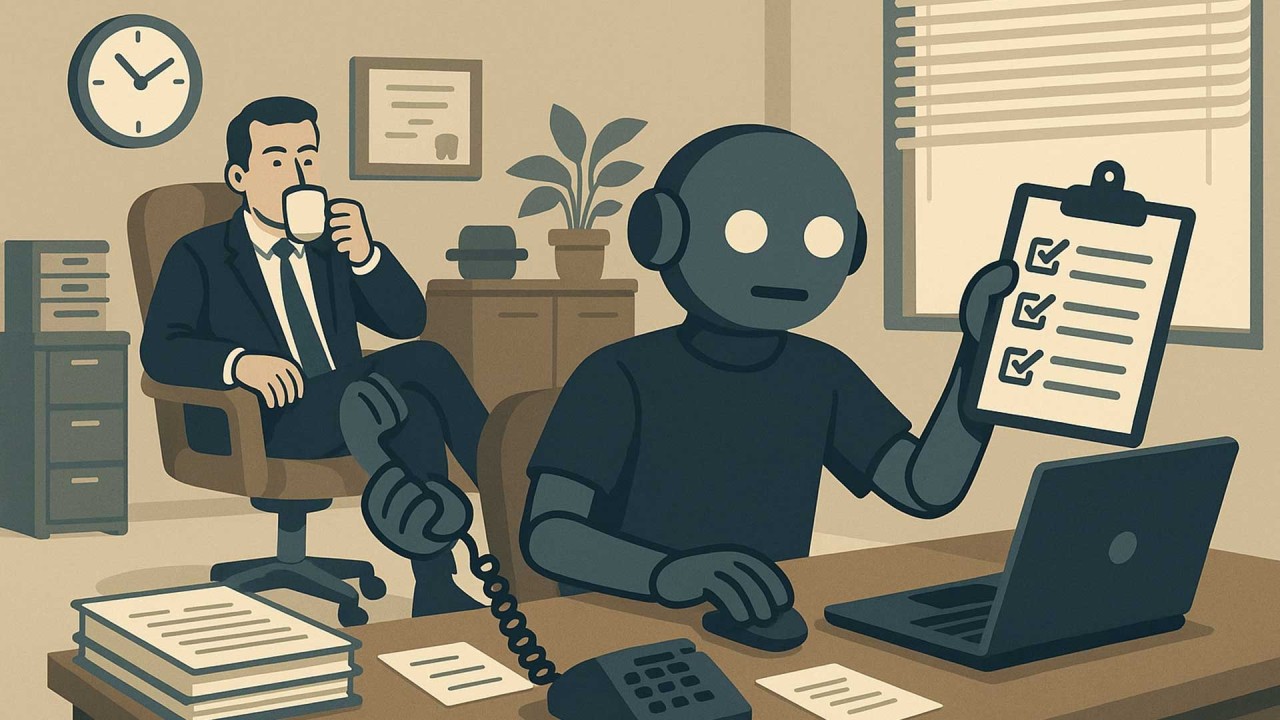
I hired an intern last summer named Maya. Bright kid, finance major, ambitious. On her second day, I gave her an assignment that usually takes new hires a full week: analyze five potential multifamily acquisitions and rank them by risk-adjusted return.
She came back in 90 minutes with all five properties analyzed, ranked, and formatted in a presentation. My first thought was that she’d cut corners. But when I reviewed her work, it was thorough, well-reasoned, and caught details I would have looked for myself.
“How did you do this so fast?” I asked.
“I used Claude,” she said, like it was obvious. “I gave it the offering memos, asked it to extract key metrics, build DCF models, identify risks, and rank them by Sharpe ratio. Then I verified everything and added my commentary.”
That’s when it hit me: The next generation doesn’t think of AI as a special tool they need to learn. They think of it as a basic utility, like Google or Excel. And the firms that treat their junior talent like they’re “too inexperienced” to use AI are going to get left behind.
The Generational Divide in AI Adoption
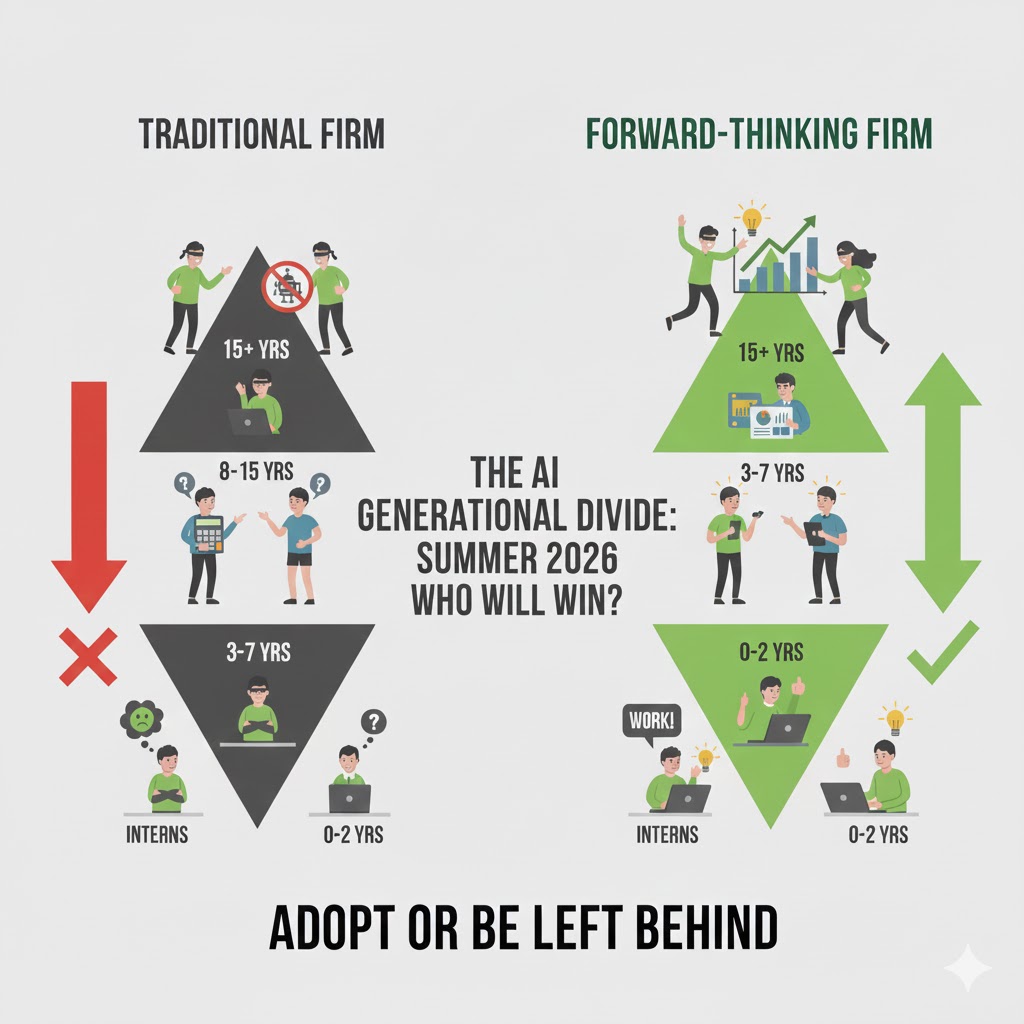
Here’s what I’ve noticed across dozens of CRE firms: there’s a perfect inverse relationship between seniority and AI adoption.
- Interns and analysts (0-2 years experience): Using AI constantly, for everything from research to formatting to learning new skills.
- Associates (3-7 years): Using AI occasionally, mostly for tasks they already understand well.
- VPs and Directors (8-15 years): Skeptical of AI, occasionally try it but don’t trust it.
- Managing Directors and Partners (15+ years): Either completely ignore AI or are very curious but don’t have time to learn it.
The juniors get it immediately because they have no legacy workflows to unlearn. The seniors resist it because they’ve built their careers on expertise that AI might commoditize. And the middle is stuck trying to figure out which side is right.
But here’s the uncomfortable truth: the junior person who’s fluent with AI is now more productive than the senior person who isn’t. That’s never been true before with any technology.
What This Means for Summer 2026
If you’re hiring interns next summer, you need to be ready for a cohort that has been using AI for their entire college career. They’ve used it to write papers, solve problem sets, prepare for interviews, and build projects. It’s as native to them as smartphones.
These interns will expect to use AI at work. If you tell them they can’t, they’ll either ignore you (and use it anyway on their personal accounts) or they’ll conclude your firm is behind the times.
But if you embrace it, you can extract absolutely extraordinary productivity from junior talent. Here’s how:
Give Them Structured AI Workflows on Day One
Don’t wait until week three to introduce AI. On day one, hand them your prompt library and say, “Here’s how we use AI for common tasks. Start with these templates.”
Show them examples of how your team uses AI for due diligence, market research, and financial modeling. Give them access to your tools. Set expectations: “We use AI to accelerate our work, not replace thinking. Always verify the output. Always add your insights.”
When Maya joined, I gave her three example workflows on her first day: how to use AI for rent roll analysis, how to use AI for market research, and how to use AI to draft sections of investment memos. By day three, she was running them independently. By week two, she was improving them.
Let Them Teach You
This is the hardest mindset shift for experienced professionals: your intern might be better at using AI than you are. That’s okay. Actually, it’s great.
Maya showed me prompting techniques I didn’t know existed. She taught me how to use AI to build sensitivity tables in Excel. She found a way to use Claude to cross-reference property data across CoStar and public records that was more thorough than what I’d been doing manually.
If you’re secure enough to learn from your junior staff, you’ll get better faster. If you’re too proud to admit they know something you don’t, you’ll stay stuck.
Redefine What “Entry-Level” Means
Some years ago, my job was grunt work. Build the model. Format the deck. Pull comps. Aggregate data. It took 2-3 years before I was trusted with actual analytical thinking.
That timeline is dead. AI does the grunt work now. Which means your junior talent can (and should) be doing higher-level work much earlier.
Maya’s second project was analyzing whether we should enter a new submarket in Atlanta. Normally, I’d assign that to a VP-level person because it requires synthesis of market data, competitor analysis, and strategic thinking. But Maya had AI to handle the research and data assembly. Her job was to think critically about what the data meant and make a recommendation.
She crushed it. And she learned more in that one project than she would have learned in six months of pulling comps.
The Risk (And How to Manage It)
The obvious concern is that junior people will use AI as a crutch and never develop fundamental
skills. That’s a real risk, but it’s manageable.
Here’s what I do: For the first month, I have junior staff explain their AI workflow to me. “Walk me through exactly how you used AI for this analysis. What did you ask it? What did it produce? How did you verify the output? What did you add yourself?”
This forces them to think critically about what AI is doing vs. what they’re contributing. It also lets me spot cases where they’re blindly trusting AI output without verification.
After the first month, if they’ve demonstrated good judgment, I give them more autonomy. But I still randomly spot-check their work and ask them to explain their process.
The key is teaching them that AI is a tool, not a substitute for thinking. Use it to go faster, but always apply your brain to the output.
The Competitive Advantage
Here’s why this matters for your firm: the best junior talent in 2026 will choose employers based on how they treat AI.
If your recruiting pitch is “We do things the traditional way, you’ll learn from the ground up,” you’ll get the risk-averse candidates who are scared of AI. If your pitch is “We give you cutting-edge tools and expect you to do VP-level work in your first year,” you’ll get the ambitious, technically savvy candidates who will actually move your firm forward.
The firms that figure this out will have a massive talent advantage. They’ll hire better people, retain them longer, and get more output per person.
The firms that don’t will slowly realize their junior talent is leaving for “more innovative” competitors.
What About the Experienced Staff?
The good news is that once your junior talent is fluent in AI, they become teachers for your mid-level and senior staff. Nothing motivates a VP to learn AI like watching their analyst finish in two hours what used to take the VP two days.
At my firm, Maya became an informal AI ambassador. People would pull her into meetings and say, “Can you show me how you did that?” She ran lunch-and-learns. She updated our prompt library. She made AI feel accessible instead of intimidating.
That’s a role junior talent has never been able to play before. It’s powerful for them (builds confidence and visibility) and powerful for your firm (accelerates adoption across all levels).
The Timeline Is Shorter Than You Think
If you’re reading this thinking, “We’ll deal with AI eventually,” you’re already behind. The class of 2026 graduates in May. They’ll start interviewing in February. If you’re not ready to talk about how your firm uses AI by then, you’re at a recruiting disadvantage.
And if you hire them without an AI strategy, you’re going to waste their potential. They’ll either get frustrated and leave, or they’ll quietly use AI in ways you can’t see (on their personal devices, with your proprietary data). Neither outcome is good.
The Bottom Line
Your 2026 intern class will be the most AI-native cohort you’ve ever hired. You can either leverage that and get extraordinary productivity, or you can suppress it and watch them leave for firms that get it.
The firms that win the next decade will be the ones that realize AI doesn’t just make experienced people more productive. It makes junior people capable of doing work that used to require 10 years of experience.
That’s not a threat to your senior staff. It’s an opportunity to scale your expertise across your entire team.
That’s the future. The only question is whether you’re ready for it.
If you want to see exactly how to put this into practice, join me this Thursday, January 15th for Wake Up to 2026 AI: The Workshop to Finally 2x Your Output and register here.
Frequently Asked Questions About AI-Native Interns And Junior Talent In CRE
There is a near-perfect inverse relationship between seniority and AI adoption. Interns and analysts use AI constantly because they have no legacy workflows to unlearn. They have used AI throughout college for writing, problem sets, interviews, and projects, so it feels as natural as a search engine or spreadsheet. Senior professionals resist because they have built careers on expertise that AI might commoditize. The uncomfortable truth is that a junior person fluent with AI is now more productive than a senior person who is not, and that has never been true before with any previous technology.
On day one, hand them your prompt library and show them how your team uses AI for common tasks like due diligence, market research, and financial modeling. Give them access to your tools and set clear expectations that AI is used to accelerate work, not replace thinking, and that output must always be verified. Within days they will be running workflows independently. Within weeks they will be improving them.
For the first month, have junior staff walk you through exactly how they used AI for each analysis. Ask what they prompted, what it produced, how they verified the output, and what they added themselves. This forces critical thinking about what AI is doing versus what they are contributing and lets you spot cases of blind trust. After they demonstrate good judgment, give more autonomy but continue to spot-check randomly. The key is teaching them that AI is a tool, not a substitute for thinking.
AI handles the traditional grunt work of building models, formatting decks, pulling comps, and aggregating data. That means junior talent can and should be doing higher-level analytical and strategic work much earlier in their careers. When AI handles the research and data assembly, a first-year analyst can take on projects like submarket entry analysis that used to require VP-level experience. They learn more in one project than they would in six months of pulling comps.
Your intern may be better at using AI than you are, and that is a good thing. Junior staff can show you prompting techniques you did not know existed, find ways to cross-reference data more thoroughly than manual methods, and build tools that accelerate the whole team. When junior talent becomes an informal AI ambassador running lunch-and-learns and updating prompt libraries, it builds their confidence and visibility while accelerating adoption across all levels of the firm.
The best junior talent in 2026 will choose employers based on how they treat AI. Firms that pitch cutting-edge tools and expect high-level work from day one will attract ambitious, technically savvy candidates. Firms that pitch doing things the traditional way will get risk-averse candidates. If you hire AI-native talent without an AI strategy, they will either get frustrated and leave or quietly use AI on personal devices with your proprietary data. Neither outcome is good for the firm.
The class of 2026 will be the most AI-native cohort any CRE firm has ever hired. They have used AI for their entire college career. If your firm is not ready to talk about how it uses AI during the interview process, you are already at a recruiting disadvantage. The firms that win the next decade will be the ones that realize AI does not just make experienced people more productive. It makes junior people capable of doing work that used to require ten years of experience.